Runny Nose vs Blocked Nose: What Parents Should Know Before Choosing Care
Runny nose and blocked nose are common in babies and children, especially during cold season, allergy season, or when the weather changes. Both can make children uncomfortable, but they are not always the same problem.
Understanding the difference can help parents choose the right care at home.
What is a runny nose?
A runny nose means mucus is coming out from the nose. It may be clear, watery, thick, white, yellow, or green.
Common causes include cold, flu, allergy, dust, weather change, or nasal irritation.
For most mild runny noses, parents can help by keeping the nose clean, giving enough fluid, and letting the child rest.
What is a blocked nose?
A blocked nose means the child feels hard to breathe through the nose. Sometimes mucus is inside but does not come out easily.
Blocked nose can affect feeding, sleeping, and breathing comfort, especially in babies.
What parents can do at home
1. Use saline to soften and clean the nose
Saline is usually the first gentle step for both runny nose and blocked nose. It helps moisturize the nose and soften thick mucus.
It can be useful before feeding, before sleep, or when the child sounds uncomfortable.
2. Use a nasal aspirator when mucus is hard to clear
For babies and young children who cannot blow their nose, a nasal aspirator can help remove mucus gently.
Use it only when needed. Do not suction too hard or too often because it may irritate the nose.
3. Consider nasal rinse for older children
For older children who can cooperate better, nasal rinse may help clear mucus and reduce nasal discomfort.
Parents should use it gently and follow proper instructions. Do not force nasal rinse if the child is scared, crying, or cannot cooperate.
What to avoid
Avoid using adult nasal sprays, unknown oils, herbal liquid, or strong-smell products inside the child’s nose unless advised by a doctor or pharmacist.
Nose care should always be gentle, especially for babies and young children.
When to see a doctor
See a doctor if your child has:
Difficulty breathing
High fever
Poor feeding or drinking
Very sleepy or weak condition
Symptoms lasting many days without improvement
Severe cough, wheezing, or chest pulling in
Blue lips or face
Helpful items to keep at home
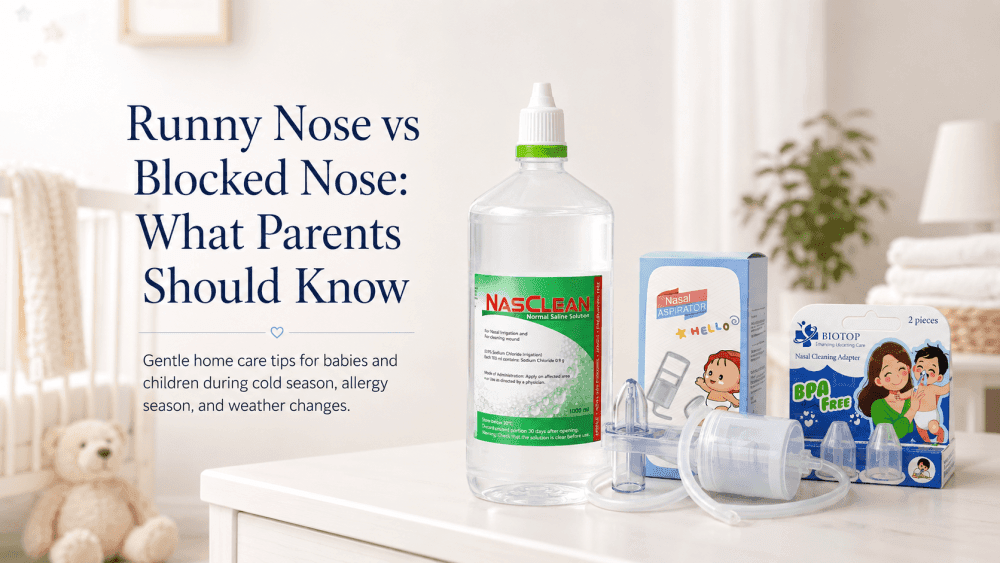
For family nose care, parents can prepare baby saline, a nasal aspirator, and nasal rinse tools for older children when suitable.
SORA for Family provides Nasclean Saline, Nasal Aspirator “Hello”, and Biotop Nasal Rinse Adaptor to support simple and gentle nose care at home.